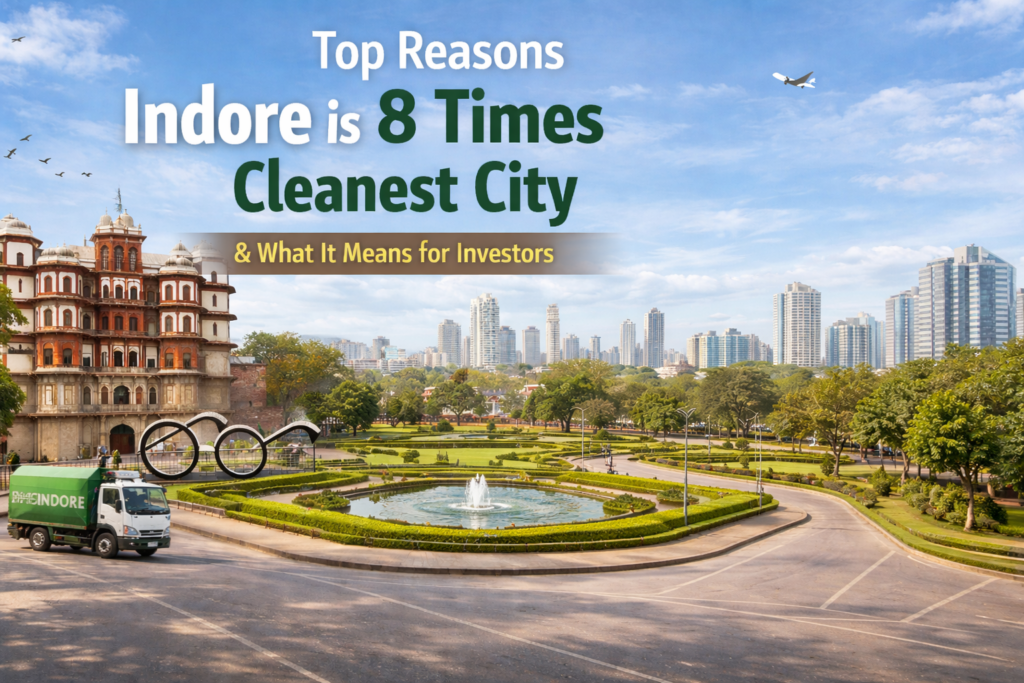
In the evolving landscape of Indian real estate, very few cities have managed to build a brand that combines livability, governance efficiency, infrastructure growth, and investment potential. One such standout city is Indore – officially recognized as India’s cleanest city for eight consecutive years under the nationwide cleanliness survey conducted through Swachh Survekshan, an initiative of the Swachh Bharat Mission.
But what does being the “8 times cleanest city” really mean? Is it just a civic achievement, or does it directly impact property prices, rental demand, commercial growth, and long-term return on investment (ROI)?
For serious investors, developers, NRIs, and business owners, the answer is clear- cleanliness is not cosmetic; it is economic. This pillar blog explores in depth why Indore continues to dominate cleanliness rankings and how that translates into one of the most stable and high-potential real estate markets in India.
When Swachh Survekshan was first introduced, many cities competed aggressively. However, sustaining the top rank year after year requires a systemic transformation rather than temporary efforts.
Indore implemented structural reforms including 100% door-to-door waste collection, strict source segregation, GPS-enabled garbage tracking, scientific waste processing plants, public participation campaigns, and heavy penalties for non-compliance.
Unlike cities that improved temporarily, Indore institutionalized cleanliness as a civic culture. Waste segregation became mandatory. Residents adopted disciplined habits. Municipal authorities built a robust monitoring system.
From a governance perspective, this reflects administrative consistency, long-term urban planning, and strong political will – three factors that significantly reduce investment risk in real estate markets.
Investors often evaluate infrastructure, connectivity, and employment growth. However, urban cleanliness directly influences:
A clean city attracts skilled professionals, entrepreneurs, and multinational companies. These people need housing, office space, retail outlets, and hospitality infrastructure.
Thus, cleanliness indirectly fuels demand in the property market.
In comparison to polluted Tier-1 metros, Indore offers a cleaner environment with lower congestion and affordable entry prices. This positions it as a preferred Tier-2 investment destination.
The consistent performance of the Indore Municipal Corporation has played a critical role. The city adopted a data-driven approach to waste management, implemented technology backed surveillance systems, and ensured strict compliance.
Strong governance reduces systemic risks such as:
For real estate investors, governance stability directly correlates with property price appreciation and market confidence. A city that manages sanitation effectively is more likely to manage infrastructure and development effectively as well.
Indore is a key participant in the Smart Cities Mission, which has accelerated urban modernization.
Under this initiative, the city has witnessed:
When smart infrastructure is combined with civic discipline, the outcome is a highly livable urban ecosystem.
For investors, smart city infrastructure increases the probability of sustained commercial demand, corporate leasing, and premium residential absorption.
Real estate markets grow sustainably only when backed by employment generation. Indore benefits from the nearby industrial powerhouse Pithampur, often referred to as the “Detroit of India” due to its strong manufacturing base.
Automobile, pharmaceutical, and engineering companies operate in this industrial corridor, generating thousands of jobs.
Additionally, the city’s strategic location near Ujjain strengthens religious tourism and hospitality demand, particularly with upcoming large scale events like Simhastha 2028 driving infrastructure expansion.
Employment-driven demand ensures consistent rental occupancy and reduces vacancy risk for investors.
Over the last decade, Indore has witnessed steady appreciation in both plotted developments and residential apartments. Clean surroundings enhance neighborhood desirability.
Buyers are willing to pay premium prices for well-maintained localities, organized waste systems, and hygienic surroundings.
Clean cities experience:
Investors targeting 5-10 year appreciation cycles benefit significantly from cities with strong civic branding.
Rental yield depends heavily on tenant retention. A clean and organized city increases tenant satisfaction.
Compared to expensive metro cities where rental yields often hover between 2-3%, Indore offers relatively better yield percentages due to affordable purchase prices and growing tenant demand.
Cleanliness enhances:
Thus, investors seeking steady rental income find Indore a stable choice.
Clean and organized cities attract migration from smaller towns and even from overcrowded metros.
Indore’s combination of affordability, cleanliness, employment, and educational institutions makes it a magnet for upwardly mobile families.
As migration increases, demand expands toward emerging corridors such as:
These zones are witnessing plotted townships, premium residential projects, and commercial developments.
Clean cities perform better in tourism metrics. Visitors associate cleanliness with safety and comfort.
Indore’s growing hospitality ecosystem benefits from its strategic connectivity and organized infrastructure. As business travel increases, demand for serviced apartments and commercial retail spaces also rises.
Hospitality expansion typically drives nearby real estate appreciation.
City branding plays a crucial role in real estate valuation. Being known nationally as “India’s cleanest city” creates psychological trust among investors.
Brand perception influences:
Indore’s cleanliness brand acts as a trust certificate.
Real estate investment carries risks such as policy instability, poor infrastructure maintenance, and declining livability.
Indore’s 8-year cleanliness streak demonstrates:
This reduces long-term uncertainty and enhances market stability.
While many Tier-2 cities are developing, few have demonstrated consistent governance success at this scale.
Indore combines:
This multi layered advantage differentiates it from other emerging markets.
Indore’s recognition as India’s cleanest city for eight consecutive years is not merely a civic milestone. It represents governance excellence, citizen discipline, infrastructure commitment, and sustainable planning.
For real estate investors, these factors translate into:
In a market where investors increasingly prioritize quality of life along with returns, Indore stands as one of India’s most balanced and promising property destinations.
Clean cities create confident investors. And confident investors build appreciating markets.
How Can We Help You?
© 2025 All Rights Reserved. @ Floorwalk Consultants Private Limited.
WhatsApp us